
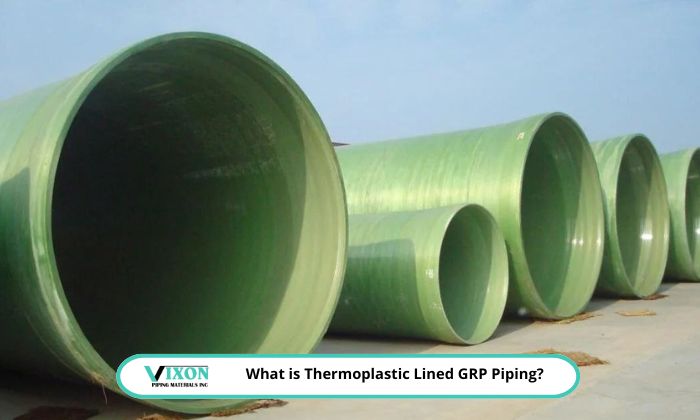
In industries where pipelines handle aggressive chemicals, seawater, or corrosive fluids, material durability is critical. One innovative solution that’s gaining popularity is thermoplastic lined GRP piping. This advanced piping system combines the strength of Glass Reinforced Plastic (GRP) with the chemical resistance of thermoplastic liners, creating a versatile and reliable solution for demanding environments.
This complete guide explains what thermoplastic lined GRP piping is, how it’s made, its benefits, applications, and how it compares to other piping systems.
What Is Thermoplastic Lined GRP Piping?
Thermoplastic lined GRP piping is a composite piping system made by combining an inner thermoplastic liner with a structural GRP (Glass Reinforced Plastic) outer layer. The inner liner acts as a barrier to corrosive fluids, while the GRP layer provides mechanical strength, impact resistance, and structural integrity.
This dual-layer construction allows the piping to handle aggressive chemicals while maintaining high performance and a long service life.
Why Use Thermoplastic Lining in GRP Pipes?
The purpose of the thermoplastic lining is to protect the pipe from internal corrosion and chemical attack. GRP by itself is not always suitable for strong acids, solvents, or high-purity applications. Thermoplastic liners enhance the pipe’s:
- Chemical Resistance: Withstand harsh chemicals like acids, alkalis, and solvents.
- Temperature Tolerance: Manage both high and low operating temperatures.
- Durability: Reduce degradation over time and extend lifespan.
- Cleanliness: Prevent contamination in sensitive applications like water treatment.
Common Thermoplastics Used for Lining
Several types of thermoplastics are used depending on the fluid type and temperature requirements:
1. Polypropylene (PP)
- Good chemical resistance
- Economical choice for medium temperature ranges
2. Polyvinyl Chloride (PVC)
- Cost-effective
- Ideal for water and mild chemical services
3. Polyvinylidene Fluoride (PVDF)
- Excellent resistance to UV and aggressive chemicals
- Suitable for high-purity and high-temperature applications
4. Polytetrafluoroethylene (PTFE)
- Extreme chemical resistance
- Excellent choice for highly corrosive media
How Are Thermoplastic Lined GRP Pipes Manufactured?
The manufacturing process involves bonding or mechanically fixing a thermoplastic liner inside a GRP pipe. Common techniques include:
- Hand Lay-Up: Layering resin and fiberglass manually over a liner.
- Filament Winding: Automated winding of glass fibers impregnated with resin around the liner.
- Curing and Finishing: The pipe is cured and inspected to ensure proper bonding and quality.
This hybrid structure ensures the inner liner remains intact under pressure, temperature, and flow conditions.
Applications of Thermoplastic Lined GRP Piping
These pipes are widely used in sectors where fluid media pose corrosion risks or where long-term performance is essential:
- Chemical Processing Plants
- Desalination and Water Treatment Facilities
- Oil & Gas Industry
- Fertilizer and Pulp & Paper Industries
- Power Generation
In each case, the thermoplastic liner protects against corrosion, while GRP offers strength and lightweight handling.
Advantages of Thermoplastic Lined GRP Piping
Here’s why industries are increasingly switching to this type of piping:
- High Corrosion Resistance
Perfect for handling aggressive fluids. - Lightweight and Strong
Easier to transport and install than metal alternatives. - Low Maintenance
Smooth inner surfaces reduce scaling and fouling. - Long Service Life
Combines chemical resistance with mechanical durability. - Cost-Effective
Lower lifecycle costs due to reduced downtime and repairs.
Comparison With Other Piping Systems
| Feature | Thermoplastic Lined GRP | Lined Steel Pipe | Dual Laminate Pipe |
|---|---|---|---|
| Corrosion Resistance | Excellent | Moderate | Excellent |
| Weight | Very Light | Heavy | Light |
| Installation Ease | Easy | Complex | Moderate |
| Cost | Medium | High | Medium |
| Maintenance | Low | Medium to High | Low |
Thermoplastic lined GRP offers a balanced performance between cost, chemical resistance, and ease of installation, making it suitable for a wide range of environments.
Installation and Maintenance Tips
- Store pipes away from direct sunlight before installation.
- Use proper supports to avoid stress on joints.
- Avoid sharp tools that can damage the liner.
- Conduct routine visual inspections for signs of wear.
- Use recommended jointing methods such as flanged or adhesive-bonded couplings.
Proper installation and handling ensure the longevity and performance of the piping system.
Conclusion
Thermoplastic lined GRP piping represents the best of both worlds: the chemical resistance of thermoplastics and the strength of fiberglass. It’s a proven solution in industries that demand long-lasting, low-maintenance, and corrosion-resistant piping systems.
Whether you’re handling chemicals, seawater, or aggressive industrial fluids, this piping system is engineered to perform under pressure literally.